





Table of Contents
Balustrades are an important safety feature in residential properties, helping reduce fall risks around balconies, decks, stairways, landings and other elevated areas. Beyond safety, a well-designed balustrade can complement a home's architecture and improve the appearance of indoor and outdoor spaces.
Homeowners considering custom balustrades in Shellharbour, Wollongong, or matching custom handrails should consider materials, height, spacing, structural strength, maintenance and compliance requirements. This blog explains the main residential balustrade options, Australian requirements, design considerations and factors to review before installation.
Why are Balustrades Important for Residential Properties?
A properly designed balustrade provides a physical barrier between people and an exposed edge. This becomes particularly important in homes with:
- Elevated balconies
- Internal or external staircases
- Raised decks
- Verandas
- Mezzanine areas
- Landings
- Significant changes in floor level
NSW Government guidance specifically states that balconies, decks, balustrades and railings must comply with the Building Code of Australia and relevant Australian Standards. It also recommends regular inspection and maintenance.
How Do Balustrades Help Prevent Falls?
The NCC's residential performance requirements state that a barrier must be provided in certain situations where people could fall 1 metre or more from a floor, roof or sudden change in level.
The required barrier must also be continuous across the relevant hazard and have adequate height, construction, strength and rigidity.
What are the Main Types of Residential Balustrades?
Material selection should account for architecture, location, exposure, maintenance expectations and budget.
Aluminium Balustrades
Aluminium is widely suited to contemporary residential projects because it can be fabricated into numerous profiles and designs.
Potential advantages include:
- Relatively low maintenance
- Good corrosion resistance when appropriately specified and finished
- Lightweight construction
- Custom fabrication possibilities
- A wide choice of finishes
- Suitability for modern and traditional designs
Stainless Steel Balustrades
Stainless steel can provide a clean, modern appearance and good durability when the appropriate grade, finish and maintenance regime are selected for the environment.
It may be incorporated into:
- Staircases
- Balconies
- Decks
- Handrail systems
- Glass balustrade assemblies
Glass Balustrades
Glass balustrades are popular where maintaining sightlines is important.
They can work well around:
- Balconies
- Internal staircases
- Decks
- Terraces
- Contemporary architectural spaces
Steel Balustrades
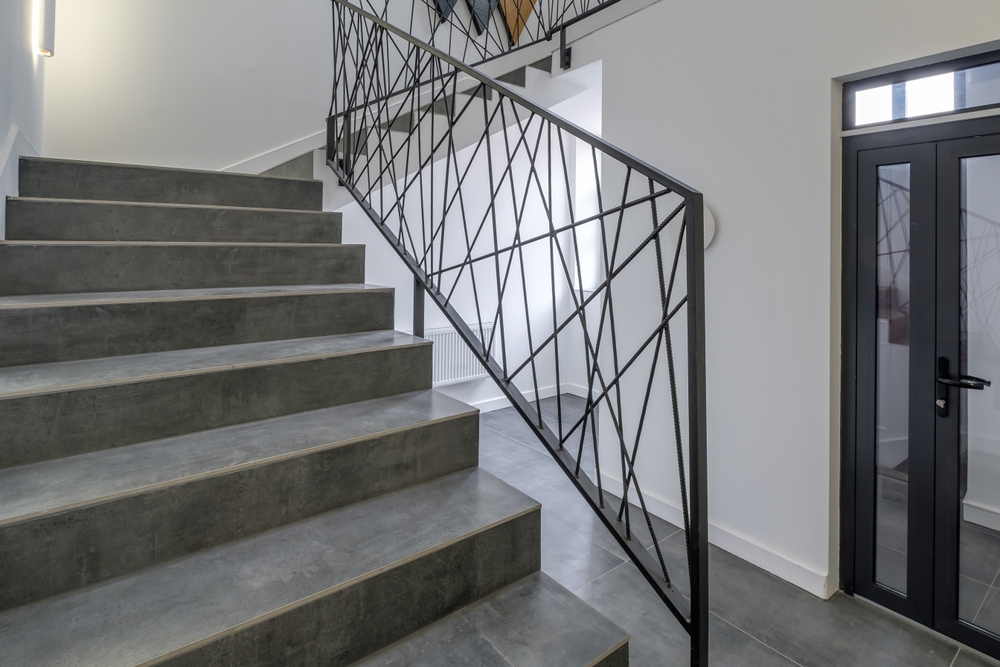
Steel offers considerable design flexibility and can suit both contemporary and traditional homes. It can be fabricated into minimalist vertical designs, decorative patterns or heavier architectural features.
What is the Difference Between a Balustrade and a Handrail?
A balustrade or barrier primarily protects people from falling from an exposed edge. A handrail provides something to grip for stability while travelling along stairs or ramps.
The NCC specifically requires stairways and ramps to have suitable handrails where necessary to assist people and provide stability.
Why Choose Custom Handrails?
Customisation can provide greater flexibility over:
- Length and configuration
- Mounting positions
- Profiles
- Materials
- Finishes
- Corners and transitions
- Integration with balustrades
- Architectural styling
This is especially useful during renovations where standard components may not align neatly with existing structures.
Why Choose Custom Balustrades for Your Home?
Custom fabrication provides an opportunity to create a barrier system tailored to the property's measurements, design, and functional requirements. Custom fabrication gives homeowners greater control over details such as:
- Post spacing
- Balustrade profiles
- Infill configuration
- Material combinations
- Powder-coated finishes
- Handrail shapes
- Mounting arrangements
What Should You Consider When Choosing Balustrades for Coastal Homes?
Homes around Wollongong, Shellharbour and Kiama experience coastal environmental conditions that should influence material and finish selection. Salt carried by the wind can settle on exterior metalwork, particularly at properties closer to the ocean.
Which Factors Matter in Coastal Areas?
When specifying balustrades in Wollongong or nearby coastal communities, consider:
- Material selection
- Protective finishes
- Appropriate metal grades
- Quality of fabrication
- Drainage and water retention
- Exposure to salt spray
- Cleaning requirements
- Compatibility between different metals
Routine washing and inspection can also help identify surface deterioration before it develops into a larger problem.
How Should Residential Balustrades Be Maintained?
Maintenance requirements depend on the material and the surrounding environment.
Look closely for:
- Movement when pressure is applied
- Loose bolts or fasteners
- Corrosion around joints
- Deteriorated coatings
- Damage after storms or impacts
- Cracks in glass components
- Loose custom handrails
- Changes around structural mounting points
Why is Professional Fabrication and Installation Important?
Balustrades are safety systems, which makes accurate fabrication and installation particularly important. Professional fabrication accounts for dimensions, structural conditions, fixing points, materials, and applicable compliance requirements.
Professional custom balustrades also allow handrails, posts, and infill components to be coordinated as a single complete system rather than treating each element separately.
Choose MLR Engineering for Custom Balustrades and Handrails
Balustrades combine architecture, fabrication and an important safety function. Choosing a solution suited to the property, exposure conditions, and applicable building requirements can help create a safer and more visually cohesive home.
At MLR Engineering, we provide custom metal fabrication solutions for residential projects across Dapto, Shellharbour, Kiama and Wollongong. Whether you are planning custom balustrades for your home in Shellharbour or Wollongong, or purpose-built custom handrails, we can work with your project's specific design and fabrication requirements. If you are looking to make your property safer than before, our experienced team is here to help you get the job done to perfection. Contact us today.
FAQs
A residential balustrade acts as a protective barrier around elevated areas such as balconies, decks, stairs and landings. Its primary function is to reduce the risk of falls, although custom balustrades can also contribute significantly to a property’s architectural appearance.
Under current NCC residential performance requirements, a barrier is required in specified circumstances where a person could fall 1 metre or more from a floor, roof or sudden change in level. Different provisions can apply to windows and specific building situations, so project requirements should be professionally confirmed.
Common options include aluminium, steel, stainless steel, and glass, as well as systems that combine multiple materials. The appropriate choice depends on the home’s design, installation location, coastal exposure, maintenance expectations, and the project’s structural and compliance requirements.
A balustrade primarily serves as a barrier to prevent falls from an exposed edge, while a handrail provides a secure gripping surface for people using stairs or ramps. Depending on the design, a residential system may incorporate both functions.
Yes, provided suitable materials, finishes, fabrication methods and maintenance practices are selected for the environment. Properties around Wollongong, Shellharbour and Kiama may experience greater exposure to airborne salts, making corrosion resistance and routine inspection important considerations for exterior installations.
Professional custom fabrication allows the balustrade to be designed around the property’s actual dimensions, architecture and structural conditions. It can also integrate posts, infill elements and custom handrails into a coordinated system while addressing relevant building and safety requirements.